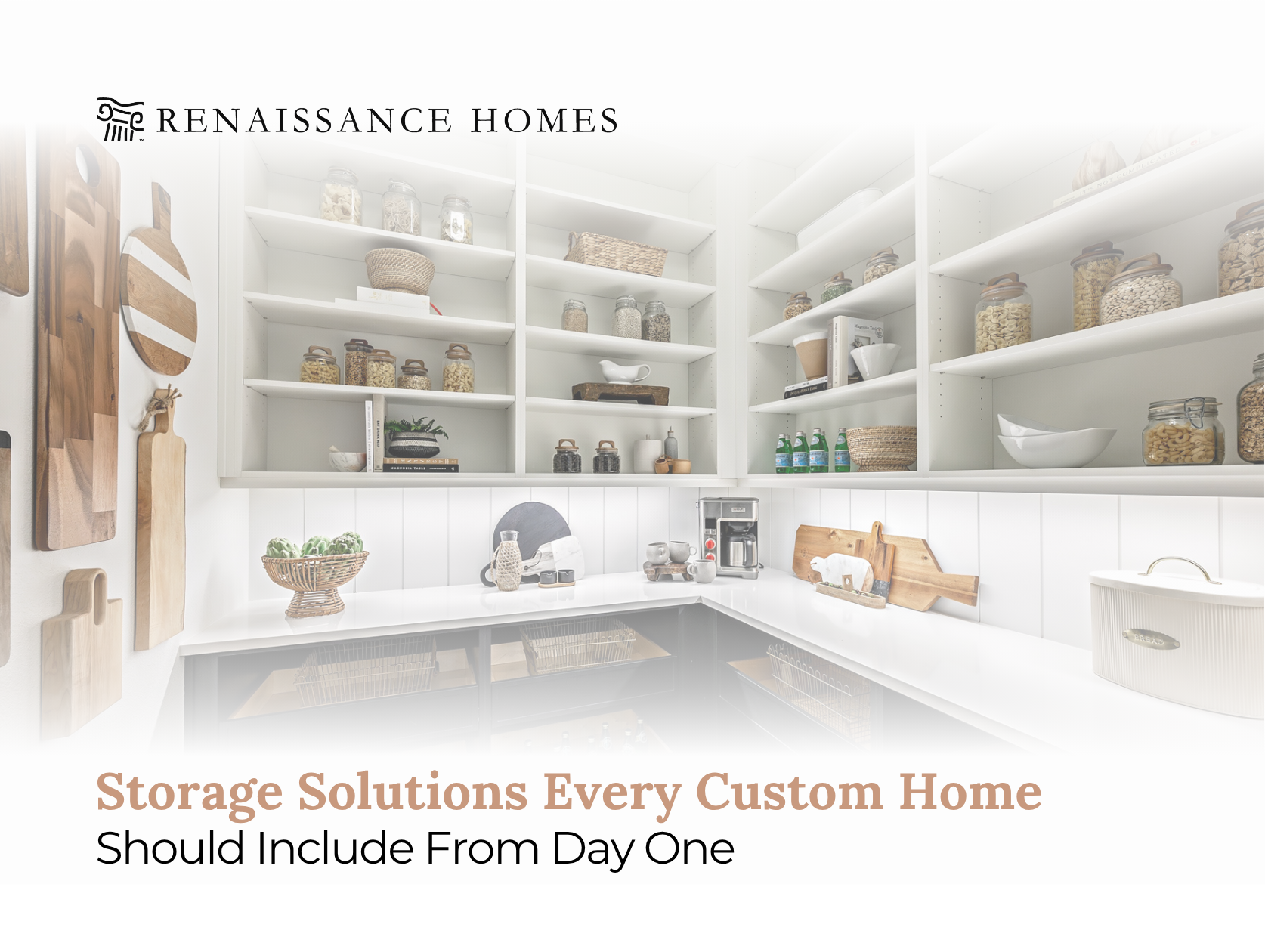
Inadequate storage ranks among homeowners’ most common regrets about their residences. Despite generous square footage and thoughtful design, homes lacking strategic storage solutions quickly feel cluttered and disorganized. The opportunity to build abundant, well-planned storage into your custom home from the beginning represents one of the most valuable advantages of new construction, preventing frustration and maximizing livability for decades to come.
Why Storage Planning Matters
The Cost of Insufficient Storage
Homes without adequate storage force occupants into uncomfortable compromises. Belongings accumulate in garages intended for vehicles, guest rooms transform into storage repositories, and visual clutter diminishes otherwise beautiful spaces. The psychological impact of disorganization creates stress and reduces enjoyment of your home investment.
Retrofitting storage after construction proves expensive and disruptive. Adding closets, pantries, or organizational systems requires construction work, finish repairs, and often compromise on ideal configurations. Built-in storage included during initial construction costs a fraction of later additions while delivering superior results integrated seamlessly with home design.
Long-Term Value and Functionality
Comprehensive storage enhances daily living while protecting property value. Buyers consistently prioritize homes offering abundant, well-organized storage. Walk-in closets, butler’s pantries, mudrooms, and garage storage systems represent features that distinguish premium properties from standard offerings in competitive markets.
Thoughtful storage planning creates homes that function effortlessly through all life stages. Young families need toy storage and diaper changing supplies readily accessible. Empty nesters require different configurations supporting hobbies, collections, and guest accommodations. Homes with flexible, generous storage adapt gracefully to these evolving needs without requiring expensive renovations.
Kitchen Storage Solutions
Cabinet Organization Systems
Premium kitchen cabinetry incorporates organizational features that maximize usable space while maintaining accessibility. Pull-out shelving eliminates deep reaching into base cabinets, bringing contents forward for easy selection. Drawer dividers organize utensils, tools, and small items preventing the jumbled chaos common in standard drawer configurations.
Vertical dividers store baking sheets, cutting boards, and serving platters efficiently rather than stacking them in awkward piles. Appliance garages conceal countertop equipment behind doors, maintaining clean surfaces while keeping items readily accessible. These purpose-built solutions work significantly better than attempting to organize standard cabinet boxes with aftermarket accessories.
Pantry Integration
Butler’s pantries adjacent to kitchens provide extraordinary value through dedicated spaces for food storage, small appliances, and serving pieces. These rooms eliminate kitchen clutter by housing items used regularly but not requiring constant access. The separation allows party preparation without disrupting kitchen work zones.
Walk-in pantries with floor-to-ceiling adjustable shelving accommodate everything from bulk purchases to specialty ingredients and seasonal entertaining items. Deep pantries with shelving on both sides maximize storage within minimal footprints. Integrated counters within pantries create staging areas for meal preparation or coffee stations, further extending kitchen functionality.
Specialized Kitchen Storage
Corner cabinet solutions including lazy Susans or pull-out systems access otherwise wasted space in these challenging configurations. Drawer bases for pots and pans prove superior to traditional lower cabinets, providing visibility and accessibility that eliminates rummaging through stacked cookware.
Integrated recycling centers with separate compartments for various materials maintain sustainability practices without cluttering kitchens with unsightly bins. Pull-out trash systems conceal waste containers while maintaining convenient access. Charging drawers with integrated outlets store and charge devices out of sight, eliminating countertop cord clutter.
Understanding how storage integrates with overall kitchen planning becomes clearer when exploring top design features custom home builders incorporate, which examines how organizational elements enhance contemporary kitchen functionality.
Master Closet Design
Walk-In Closet Configurations
Generous master closets represent one of the most appreciated luxury home features. Configurations should accommodate long hanging for dresses and coats, double hanging for shirts and slacks, shelving for folded items and shoes, and drawer space for accessories and delicates. Island units in larger closets provide additional storage while creating dedicated dressing areas.
Adjustable shelving systems adapt to changing wardrobe needs over time. What works for extensive business attire evolves when careers shift or retirement arrives. The flexibility to reconfigure without major renovation maintains utility through life changes. Quality closet systems last decades, justifying investment in premium components and thoughtful initial planning.
Specialized Closet Features
Jewelry drawers with felt lining and divided compartments protect valuables while maintaining organization. Pull-out valet rods facilitate outfit planning and staging. Integrated hampers eliminate bedroom clutter from soiled clothing. LED lighting illuminates closet interiors, making selection easier while showcasing wardrobe collections.
Shoe storage solutions ranging from angled shelves to cubbies and display racks accommodate various collection sizes and preferences. Handbag storage prevents expensive accessories from being stacked or crushed, displaying them attractively while maintaining shape. Belt and tie racks keep these items organized and accessible rather than tangled in drawers.
Secondary Closets
Guest bedroom closets sized generously enough for visitors’ belongings make guests feel truly welcome. Even if rarely used for overnight guests, these closets provide valuable storage for seasonal items, luggage, or household overflow. The flexibility proves valuable throughout homeownership.
Children’s closets designed with adjustable systems grow with occupants from toddler clothing to teenage wardrobes. Lower hanging rods accessible to young children promote independence while upper rods maximize vertical space. Built-in dresser units integrate clothing storage within closet footprints, freeing bedroom floor space.
Mudroom and Entry Storage
Functional Mudroom Design
Mudrooms transform entries from chaotic dumping grounds into organized transition zones between outdoors and home interiors. Locker-style systems with individual compartments for each family member provide dedicated spaces for coats, bags, shoes, and personal items. Hooks at varying heights accommodate both adults and children.
Bench seating with storage underneath offers convenient spots for removing shoes while concealing seasonal items or less-frequently-used gear. Open cubbies above benches store everyday items requiring quick access, while closed cabinets conceal clutter. The balance between open and closed storage creates functional spaces maintaining visual order.
Specialty Mudroom Features
Integrated pet care stations with built-in food and water bowls, leash hooks, and storage for supplies keep animal accessories organized and accessible. Wash sinks in mudrooms prove invaluable for cleaning muddy hands, rinsing produce from gardens, or washing pets without tracking dirt through homes.
Charging stations for devices, car keys, and electronics prevent these items from migrating throughout houses. Mail sorting centers with slots for different family members or categories keep paper organized. These dedicated spots for specific activities create systems that maintain themselves once established, reducing household chaos.
Secondary Entry Considerations
Garage entries function as primary access points for many families, warranting storage attention equal to formal front entries. Drop zones just inside garage doors with hooks, shelves, and counter space create convenient staging areas for items transitioning between vehicles and homes.
Boot trays and umbrella stands near exterior doors contain wet or dirty items without allowing them into main living spaces. Coat closets near secondary entries provide alternatives to mudrooms in homes where dedicated mudroom space proves impractical. Even modest storage at entry points dramatically improves household organization.
Bathroom Storage Planning
Vanity Storage Solutions
Bathroom vanities incorporating deep drawers outperform traditional cabinet-and-drawer combinations, providing better accessibility and organization. Drawer dividers keep toiletries, cosmetics, and grooming tools separated and accessible. Electrical outlets within drawers accommodate hair dryers, electric toothbrushes, and other devices without visible countertop cord clutter.
Double vanities benefit from asymmetric drawer configurations recognizing that occupants typically have different storage needs. Providing various drawer depths and specialized organizers for each user creates truly personalized storage. Under-sink storage maximizes this typically underutilized space through pull-out organizers navigating around plumbing.
Linen and Towel Storage
Linen closets on each floor eliminate trips to distant storage when replenishing bathrooms. Adequate shelving depth prevents towels from extending beyond shelves while maintaining easy access. Adjustable shelves accommodate various item sizes from washcloths to bath sheets and bulky blankets.
Built-in bathroom shelving or tower cabinets provide immediate storage within bathrooms themselves, reducing reliance on linen closets for everyday items. Open shelving displays attractive folded towels while closed cabinets conceal less photogenic necessities. This combination creates spa-like environments with practical functionality.
Medicine Cabinets and Wall Storage
Recessed medicine cabinets maximize storage without consuming floor space, ideal for smaller bathrooms. Deeper medicine cabinets with adjustable shelving accommodate larger bottles and varied item heights. Interior electrical outlets allow charging electric toothbrushes and similar devices within cabinets.
Niche shelving within showers provides convenient storage for bath products without cluttering tub edges or requiring floor-standing caddies. Tiled niches integrate seamlessly with shower design while maintaining water-tight integrity. Multiple niches at varying heights serve different users or separate shampoos from soaps and razors.
Home Office and Study Storage
Built-In Office Cabinetry
Custom built-ins create offices with generous file storage, supply cabinets, and reference material shelving while maintaining cohesive appearances that match home design. Closed lower cabinets conceal file drawers and printer storage while open upper shelving displays books and decorative items creating attractive, functional workspaces.
Integrated desk surfaces at optimal working heights with adequate knee space and wire management provisions create comfortable, organized work environments. Multiple work surfaces including stand-up desk options and separate computer stations accommodate various tasks and working styles within single rooms.
Paper and File Management
Despite digital document growth, most households still accumulate substantial paper requiring organized storage. Filing systems with clearly labeled categories prevent document chaos. Lateral file cabinets often integrate better with residential furniture than traditional vertical files while providing equivalent capacity.
Mail sorting systems with incoming and outgoing bins, bill payment stations, and shredder storage create command centers managing household paperwork efficiently. Charging stations for devices and electronics prevent home offices from devolving into cord-tangled messes. These organizational systems maintain themselves better than ad-hoc solutions attempted after moving in.
Reference Material and Book Storage
Built-in bookcases flanking windows or spanning walls provide generous storage for reference materials, professional libraries, and personal reading collections. Adjustable shelving accommodates books of varying heights while deeper lower shelves house oversized volumes and binders.
Closed cabinets at bookcase bases conceal less attractive items while maintaining unified appearances. This combination of open display and concealed storage creates attractive rooms feeling both scholarly and organized. Adequate depth prevents books from extending beyond shelves while maintaining accessibility.
Garage Storage Systems
Wall-Mounted Organization
Slatwall or pegboard systems with adjustable hooks and brackets accommodate sports equipment, garden tools, and seasonal items while maintaining floor space for vehicles. These flexible systems reorganize easily as storage needs change, providing long-term adaptability. Heavy-duty hooks support bicycles, ladders, and other substantial items vertically, maximizing cubic storage.
Upper wall cabinets utilize space between garage door tracks and ceilings that otherwise remains wasted. These cabinets store seasonal decorations, camping gear, and infrequently used items out of sight while keeping them accessible. Closed cabinets prevent dust accumulation and maintain organized appearances.
Workbench and Tool Storage
Dedicated workbenches with integrated tool storage create functional workshops supporting home maintenance and hobby projects. Pegboards above benches keep frequently used tools visible and accessible. Drawer units below benches organize hardware, fasteners, and small tools preventing disorganized accumulation.
Mobile tool carts supplement fixed storage, allowing transport of needed supplies to project locations. These portable solutions work particularly well for gardening supplies, painting equipment, and cleaning products used throughout properties. The mobility prevents constant trips retrieving forgotten items.
Overhead and Ceiling Storage
Overhead racks suspended from garage ceilings store seasonal items, luggage, and rarely used equipment above head height, preserving floor and wall space for more frequently accessed belongings. These systems work particularly well for lightweight bulky items like holiday decorations or camping equipment.
Careful weight distribution and proper installation ensure safety while maximizing available cubic garage space. Many homeowners underutilize vertical garage dimensions, allowing prime storage space to remain empty while floors remain cluttered. Strategic use of overhead storage transforms garage functionality.
Specialty Storage Spaces
Wine Storage and Cellaring
Wine enthusiasts benefit enormously from dedicated cellaring incorporated during construction. Climate-controlled wine rooms maintain optimal temperature and humidity protecting collections while creating entertaining focal points. Even modest wine storage under stairs or in unused closets provides proper conditions at reasonable costs.
Built-in wine racks in dining rooms, butler’s pantries, or kitchens display bottles attractively while maintaining accessibility. Refrigerated wine storage units accommodate serving temperatures for whites and reds without requiring separate rooms. These integrated solutions serve collectors and casual enthusiasts alike.
Hobby and Craft Storage
Dedicated hobby spaces with specialized storage prove invaluable for serious enthusiasts. Sewing rooms benefit from built-in cutting tables, fabric storage, and notion organization. Art studios need flat storage for papers and canvases, supply cabinets for materials, and display shelves for finished works.
Craft rooms with modular storage systems accommodate varied supplies from scrapbooking to woodworking. The flexibility to adjust configurations as hobbies evolve maintains utility over time. Built-in storage specific to activities creates organized, efficient spaces supporting creativity rather than hindering it through disorganization.
Seasonal and Bulk Storage
Adequate storage for seasonal items including holiday decorations, winter clothing, and summer recreation equipment prevents these belongings from cluttering everyday spaces. Dedicated storage rooms, attic spaces, or basement areas with shelving and clear labeling systems maintain organization year-round.
Bulk purchase storage accommodates warehouse club shopping habits increasingly common among households. Pantry rooms sized for case goods, paper products, and cleaning supplies reduce shopping frequency while taking advantage of volume pricing. These storage spaces pay for themselves through purchasing efficiencies.
For comprehensive approaches to planning spaces that accommodate diverse storage needs, exploring custom homes for growing families provides insights into how storage planning adapts to changing household requirements.
Utility and Mechanical Storage
Laundry Room Organization
Laundry rooms sized generously with abundant folding space, hanging rods for air drying, and cabinets for supplies transform chores from frustrating to efficient. Counter space above front-loading washers and dryers provides folding surfaces while concealing appliances behind cabinet fronts creates furniture-like appearances.
Upper cabinets store detergents, stain treatments, and cleaning supplies while lower cabinets or pull-out bins sort laundry by color or family member. Integrated ironing board cabinets save space while maintaining accessibility. Sink installations support hand washing and stain pretreatment. These features elevate laundry rooms from afterthoughts to functional spaces supporting household management.
Cleaning Supply Storage
Centralized cleaning supply closets with dedicated shelving prevent accumulation of partially used products throughout homes. Utility sinks within these spaces facilitate bucket filling and mop washing. Broom hooks and vacuum storage keep equipment organized and accessible.
Secondary cleaning supply stations on each floor reduce stair trips while performing routine maintenance. These smaller closets house basic supplies adequate for quick cleanups without requiring full product inventories. Strategic placement throughout multi-story homes dramatically improves cleaning efficiency.
Mechanical Room Organization
Even purely functional spaces benefit from organizational consideration. Shelving for furnace filters, water treatment supplies, and maintenance items keeps these necessities accessible rather than scattered. Clear labeling of shut-off valves, circuit breakers, and system controls assists both homeowners and service technicians.
Adequate space around mechanical equipment facilitates maintenance access while dedicated storage prevents using mechanical rooms as catch-all storage attracting clutter. Maintaining organizational systems in these behind-the-scenes spaces contributes to overall household order and simplifies home maintenance.
Smart Storage Features
Hidden and Concealed Storage
Toe-kick drawers beneath kitchen cabinets utilize previously wasted space for flat items like baking sheets, placemats, and table linens. Under-stair storage accessed through pull-out drawers or hinged panels transforms otherwise empty triangular voids into functional space. These hidden solutions maximize storage without impacting design aesthetics.
Window seat storage combines comfortable seating with concealed compartments accessed through lifting tops or front drawers. Built-in bench storage in breakfast nooks provides similar dual functionality. These multipurpose features maximize space efficiency particularly valuable in smaller homes or rooms.
Pull-Out and Roll-Out Systems
Pull-out pantry units maximizing narrow spaces between appliances or at cabinet ends provide surprising storage capacity. Spice pull-outs keep hundreds of bottles organized and visible. Waste basket pull-outs conceal trash while maintaining convenient access.
Roll-out shelving in base cabinets transforms dark, difficult-to-access spaces into functional storage with full visibility and easy reach. Retrofitting existing cabinets with roll-out shelves improves their utility, but incorporating these features during initial construction costs less while delivering superior integration.
Vertical Storage Maximization
Floor-to-ceiling cabinetry and shelving utilizes full vertical dimensions rather than stopping at standard heights leaving space above wasted. Custom heights accommodate ceiling planes exactly, maximizing storage while creating built-in appearances. Upper cabinets extend to ceiling lines preventing dust accumulation atop while providing additional storage.
Tall pantry cabinets, utility closets, and storage walls maximize vertical storage in minimal footprints. These solutions prove particularly valuable in kitchens, laundry rooms, and garages where floor space premiums make efficient vertical storage essential. The incremental cost of extending storage height delivers disproportionate capacity increases.
Storage for Collections and Hobbies
Display and Storage Combinations
Built-in cabinetry with glass-front uppers displays collections attractively while protecting items from dust. Lower closed cabinets provide concealed storage for less attractive necessities. This combination creates organized, attractive rooms showcasing treasured possessions without cluttered appearances.
Lighted display shelving with adjustable glass shelves showcases art glass, ceramics, or collectibles museum-style. Integrated lighting illuminates items beautifully while adjustable spacing accommodates pieces of varying heights. These custom displays honor collections while maintaining home design sophistication.
Media and Entertainment Storage
Media rooms and family spaces require storage for equipment, media collections, gaming systems, and accessories. Built-in entertainment centers integrate displays, equipment concealment, and media storage in coordinated systems. Ventilated cabinets prevent equipment overheating while closed doors maintain clean appearances when systems are not in use.
Gaming equipment storage including dedicated spaces for controllers, headsets, and games prevents these items from cluttering living spaces. Charging stations keep controllers powered and organized. These dedicated homes for equipment maintain organization and protect expensive electronics from damage.
Sports and Recreation Equipment
Active families accumulate substantial sports and recreation equipment requiring organized storage. Dedicated sports equipment storage in garages or mudrooms with specialized racks for skis, bikes, golf bags, and other gear prevents this equipment from consuming vehicle space or cluttering homes.
Seasonal rotation between active equipment and stored off-season gear maintains accessibility for current activities without dedicating premium space to unused items. Clear labeling and designated spaces for each activity’s equipment creates systems maintaining themselves once established and taught to family members.
Planning Considerations
Assessing Current and Future Needs
Inventory current possessions honestly, including items in off-site storage. Many custom home clients discover they have accumulated far more belongings than initially recognized. Understanding true storage requirements prevents underestimating needs during planning when adding capacity costs relatively little.
Consider lifestyle changes including potential children, aging parents moving in, hobby development, or collection growth. While predicting specific future needs proves impossible, planning generous baseline storage with adaptable features accommodates most evolutionary changes without requiring major renovation.
Right-Sizing Storage Spaces
Balance generous storage against creating unusable excess encouraging accumulation of unnecessary items. The goal is adequate, well-organized storage, not warehouse-sized repositories. Storage spaces sized appropriately for intended contents function better than oversized areas inviting disorganization.
Specialized storage designed for specific purposes outperforms generic space attempted for multiple uses. Purpose-built solutions cost little more during construction while delivering significantly better functionality. The investment in thoughtful, specialized custom home storage ideas pays daily dividends through effortless organization.
Accessibility and Convenience
Position storage near points of use whenever possible. Coat storage at entries proves more effective than bedroom closets. Kitchen items store near preparation areas. Laundry supplies locate in laundry rooms. This obvious principle often gets overlooked during planning, resulting in storage technically adequate but functionally frustrating.
Consider physical accessibility, particularly for frequently used items. Avoid requiring step stools or deep reaching for everyday necessities. Save highest and lowest storage for occasionally accessed items. This ergonomic consideration becomes increasingly important as homeowners age, making thoughtful initial planning pay long-term dividends.
Flexibility and Adaptability
Fixed built-ins provide maximum storage density and integrated appearances but limit future adaptability. Adjustable shelving, modular systems, and flexible spaces accommodate changing needs better than highly specialized solutions. Balance custom features with adaptable elements maintaining utility through lifestyle evolution.
Rooms designed with storage potential even if not initially finished provide expansion options as needs grow. Bonus rooms, basements, and attic spaces framed and accessed appropriately convert to additional storage or living space more easily than unplanned areas. This forethought creates homes growing with families.
Understanding how storage planning integrates with overall design approaches becomes clearer when reviewing what’s included in custom home building plans, which examines how organizational elements coordinate with architectural and functional considerations.
Common Storage Planning Mistakes
Underestimating Requirements
The most common storage planning error involves underestimating actual needs. Nearly every homeowner wishes for more storage, while complaints about excessive storage remain virtually nonexistent. When uncertain about storage quantities, err toward generous provision. The marginal cost during construction proves minimal compared to later additions.
Poor Location Choices
Placing storage inconveniently relative to use points creates organizational systems that fail. Walk-in pantries distant from kitchens go unused. Coat closets far from entries get bypassed. Storage must locate logically relative to contents and use patterns to function as intended.
Inadequate Depth and Dimensions
Storage spaces too shallow or narrow fail to accommodate intended contents efficiently. Standard closet depths barely accommodate hangers, leaving no room for storage behind hanging items. Pantry shelves too deep leave items forgotten in back corners. Proper dimensional planning ensures storage actually works for intended purposes.
Neglecting Lighting
Dark storage spaces create frustration and prevent full utilization. Adequate lighting transforms closets, pantries, and storage rooms from dim caves into functional spaces where contents remain visible and accessible. LED lighting costs minimally while dramatically improving storage utility and user experience.
Integrating Storage with Design
Maintaining Aesthetic Coherence
Storage solutions should enhance rather than compromise home design. Built-ins matching cabinetry styles and finishes create cohesive appearances. Hardware selections coordinating throughout homes maintain design unity. Thoughtful integration ensures organizational elements feel intentional rather than afterthought additions.
Balancing Function and Beauty
The best storage solutions serve practical needs while contributing aesthetically to spaces. Glass-front cabinets display attractive items while concealing utilitarian necessities. Open shelving showcases books and decorative objects while closed cabinets hide clutter. This balance creates homes both organized and beautiful.
Creating Architectural Interest
Storage elements including built-in bookcases, display niches, and custom cabinetry create architectural character distinguishing custom homes from standard construction. These features demonstrate attention to detail and craft quality that define luxury residences. Well-designed storage becomes design feature rather than necessary evil.
Cost Considerations and Value
Budget Allocation Strategies
Storage features vary dramatically in cost from simple wire shelving to fully custom built-ins. Prioritize spending on highest-impact areas including kitchen pantries, master closets, and mudrooms. Secondary spaces may accommodate more modest solutions without compromising overall home functionality.
Balance custom built-ins with quality modular systems offering good functionality at lower costs. Many manufacturers produce excellent organizational products installable during construction at reduced complexity compared to fully custom solutions. Strategic combination of approaches optimizes budgets while maximizing storage.
Return on Investment
Quality storage systems enhance home value while providing daily utility. Buyers consistently prioritize homes offering abundant, well-organized storage. The investment in thoughtful storage planning pays returns through both enhanced livability and property value appreciation.
Storage additions after construction cost substantially more than initial installation while often compromising design integration. The value proposition strongly favors comprehensive storage planning during initial design rather than attempting additions later. This forward-thinking approach protects both investment value and long-term satisfaction.
Long-Term Maintenance
Quality storage systems require minimal maintenance while lasting decades. Proper initial installation prevents common problems including sagging shelves, failing drawer slides, or loose hardware. Premium components justify slightly higher initial costs through superior performance and longevity.
Adjustable systems accommodate changing needs without requiring replacement. This flexibility protects storage investments by maintaining utility as household contents and requirements evolve. Features supporting adaptability prove worthwhile for long-term homeowners expecting lifestyle changes.
Why Hire Renaissance Homes for Your Once-in-a-Lifetime Custom Home
Locally owned and operated for over four decades, Renaissance Homes is the custom luxury home builder trusted by the area’s most discerning buyers. We are proud to offer the highest quality, most seamless home building experience, as the most awarded builder in Street of Dreams history. Our comprehensive approach to storage planning ensures every home we build includes thoughtful organizational solutions that enhance daily living.
As the best custom luxury home builder in the region, Renaissance Homes transforms dreams into reality through meticulous attention to how families actually live and what they truly need. With premium products hand-selected by our award-winning design team, every custom built home design reflects our commitment to creating homes that remain beautifully organized through decades of use. Our custom homes building process includes detailed consultations about lifestyle patterns, possessions, and organizational preferences, ensuring storage solutions truly serve your specific needs.
When you choose our custom home builder services, you’re investing in expertise refined through building hundreds of homes where storage planning proved critical to homeowner satisfaction. We understand how thoughtful organizational features transform houses into efficiently functioning homes where everything has its place. Our construction teams bring specialized knowledge about optimal storage configurations, quality organizational systems, and installation techniques that ensure your storage solutions perform flawlessly for generations.
Frequently Asked Questions
How much of my home’s square footage should be dedicated to storage?
Industry guidelines suggest 10-15% of total square footage devoted to storage including closets, pantries, utility rooms, and garage storage. However, optimal amounts vary based on lifestyle, possessions, and household size. Families with extensive collections or numerous hobbies require more storage than minimalist households. Rather than targeting specific percentages, assess your actual storage needs honestly and plan accordingly. Generous storage provision rarely creates regret, while inadequate storage proves consistently frustrating.
What are the most important storage areas to prioritize in a custom home?
Kitchen pantry storage, master bedroom closets, and mudroom organization deliver the greatest daily impact. These spaces see constant use and directly affect household efficiency and stress levels. Secondary priorities include bathroom storage, laundry room organization, and garage systems. Focus budget and planning attention where storage impacts daily life most significantly. Well-designed primary storage areas justify their investment through constant utility.
Should I plan for more storage than I currently need?
Yes, planning generous storage proves wise for several reasons. Households typically accumulate possessions over time. Life changes including children, hobbies, or aging parents bring additional storage requirements. The marginal cost of extra storage during construction is minimal compared to later additions. Storage spaces left empty initially accommodate future needs without requiring construction or renovation. This forward-thinking approach prevents common regrets about insufficient storage.
How can I maximize storage in a smaller custom home?
Maximize vertical space through floor-to-ceiling cabinetry and tall storage units. Incorporate hidden storage including under-stair spaces, toe-kick drawers, and window seat compartments. Choose furniture with integrated storage capabilities. Utilize wall space through mounted systems rather than consuming floor area. Design multipurpose rooms serving multiple functions. Eliminate rarely used formal spaces in favor of functional storage. Strategic planning allows smaller homes to feel organized and spacious through efficient storage solutions.
What storage features add the most value to custom homes?
Walk-in master closets, butler’s pantries, mudrooms with built-in organization, and finished garage storage systems consistently rank among most valued storage features. These elements appeal to broad buyer populations while providing genuine functional benefits. Quality built-in cabinetry throughout homes adds perceived value exceeding actual cost. Storage features that demonstrate thoughtful planning and attention to detail enhance overall home impressions significantly, justifying their inclusion in custom construction.