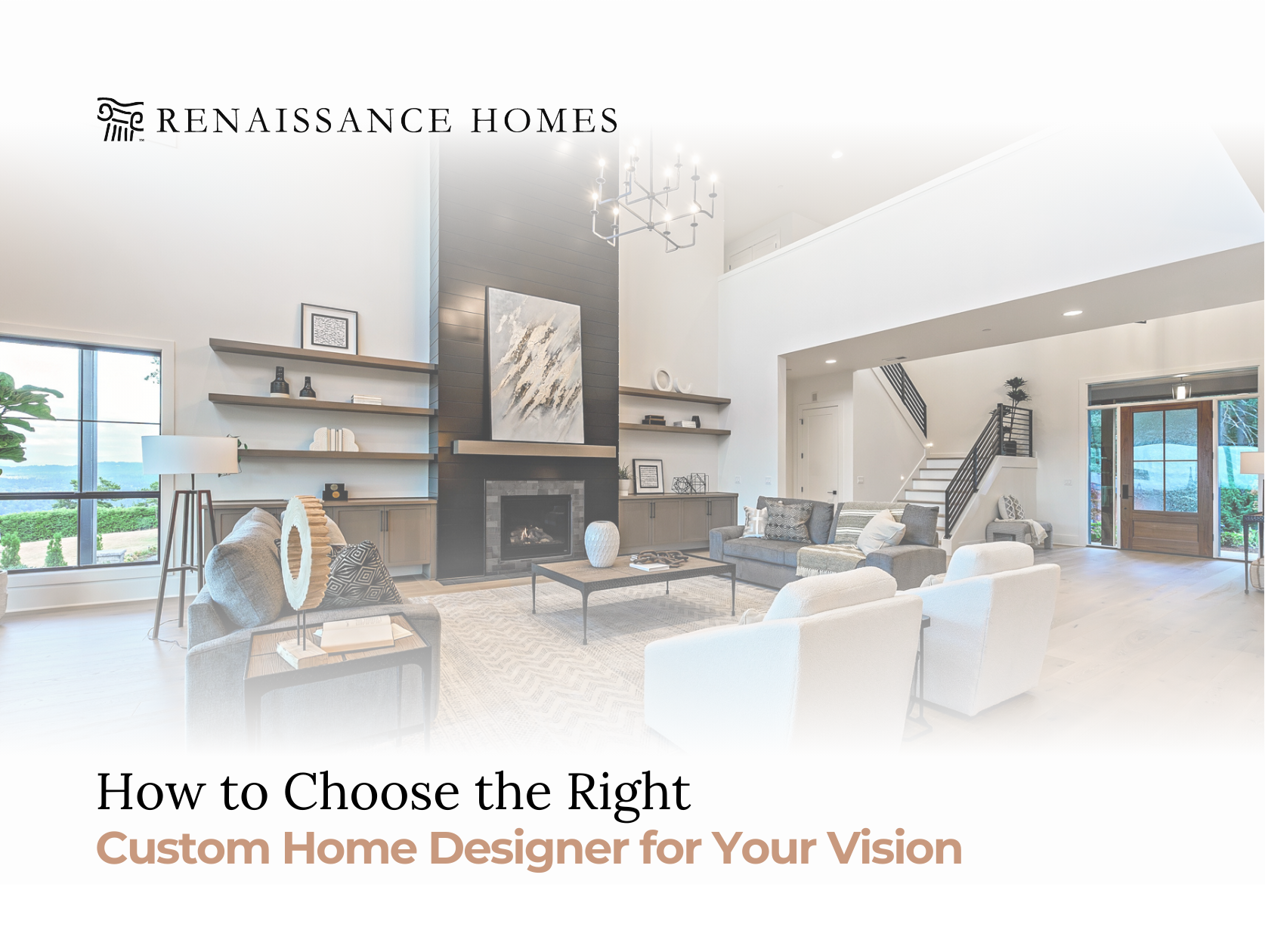
Building a custom home represents one of life’s most significant investments, and selecting the right custom home designer can make the difference between a dream realized and a project filled with frustration. The designer you choose will shape not only the aesthetic appeal of your home but also its functionality, efficiency, and long-term value. Understanding how to evaluate potential designers and what qualities to prioritize ensures your vision transforms into a residence that exceeds expectations.
Understanding the Role of a Custom Home Designer
A custom home designer serves as the creative architect of your vision, translating abstract ideas into concrete plans. Unlike production builders who work from predetermined templates, a custom home designer collaborates directly with you to craft a residence tailored to your specific lifestyle, preferences, and needs. This professional bridges the gap between your imagination and the technical requirements of construction, ensuring every element aligns with building codes while reflecting your personal style.
The designer’s responsibilities extend beyond drawing blueprints. They consider site orientation, natural light patterns, traffic flow, spatial relationships, and how each room will function in daily life. A skilled designer also factors in future needs, creating flexible spaces that adapt as your circumstances change. When evaluating candidates, look for professionals who demonstrate genuine curiosity about how you live and what matters most in your daily routines.
Evaluating Experience and Specialization
Experience matters significantly when choosing a custom home designer. While talent exists at all career stages, designers with substantial portfolios bring invaluable problem-solving skills developed through years of navigating unexpected challenges. Review their previous projects not just for aesthetic appeal but for diversity of style and complexity. A designer comfortable with various architectural approaches demonstrates adaptability that may prove essential as your own vision evolves during the planning process.
Specialization also deserves consideration. Some designers excel at modern minimalist aesthetics, while others specialize in traditional or transitional styles. If you have strong stylistic preferences, seek designers whose portfolios showcase expertise in your preferred direction. Regional experience matters as well. Designers familiar with the Pacific Northwest understand local climate considerations, building codes, and design trends that resonate with the area’s character.
Assessing Communication and Collaboration Style
The relationship between client and custom home designer requires exceptional communication. During initial consultations, evaluate how well potential designers listen to your ideas and ask clarifying questions. Do they seem genuinely interested in understanding your lifestyle, or do they immediately push their own agenda? The best designers balance professional expertise with respect for client input, creating collaborative partnerships rather than dictating solutions.
Pay attention to how designers explain technical concepts. Can they translate architectural terminology into language you understand? Do they use visual aids like sketches or digital renderings to help you visualize proposals? Effective communication prevents misunderstandings that could lead to costly changes during construction. A designer who patiently educates clients throughout the process empowers better decision-making and greater satisfaction with the final result.
Reviewing Portfolio Quality and Diversity
A designer’s portfolio provides the most direct evidence of their capabilities. When reviewing past projects, look beyond surface-level aesthetics to examine thoughtful details. Notice how they’ve solved spatial challenges, integrated indoor and outdoor living areas, or incorporated natural light. High-quality portfolios demonstrate attention to proportion, material selection, and how individual elements contribute to cohesive overall designs.
Diversity within a portfolio indicates versatility and creative range. While some consistency in style suggests a designer has developed expertise in particular approaches, too much similarity might signal limited adaptability. The ideal portfolio showcases various project types, scales, and stylistic approaches while maintaining consistently high execution standards. Request to see projects similar to what you envision for your own home to assess whether the designer has successfully navigated comparable challenges.
Understanding the Design Process and Timeline
Different designers follow different methodologies, and understanding their process helps set realistic expectations. During initial meetings, ask potential designers to outline their typical workflow from concept development through final construction documentation. How many revision rounds do they typically include? At what stages will you review and approve designs? What deliverables should you expect at each phase?
Timeline discussions deserve equal attention. Custom home building involves numerous sequential steps, and design represents a critical early phase that influences everything that follows. A rushed design process often leads to expensive changes during construction when modifications become exponentially more costly. Conversely, indefinite timelines without clear milestones can cause projects to drift. Seek designers who establish realistic schedules with defined checkpoints while remaining flexible enough to accommodate thoughtful decision-making.
Verifying Credentials and Professional Affiliations
Professional credentials provide assurance that a custom home designer maintains industry standards and continues their education. Many states require licensing for professionals who prepare construction documents, though requirements vary by jurisdiction and project scope. Ask about educational background, professional certifications, and any specialized training relevant to your project’s unique aspects, such as sustainable design or accessibility features.
Membership in professional organizations like the American Institute of Architects or the National Kitchen and Bath Association indicates commitment to ethical practices and professional development. These affiliations also provide clients with recourse should disputes arise. Don’t hesitate to request references from previous clients and follow up with those contacts to learn about their experiences, particularly regarding how the designer handled challenges and whether the final project met expectations.
Discussing Budget and Fee Structures
Financial transparency establishes trust and prevents misunderstandings. Custom home designers typically charge through various fee structures including flat fees, hourly rates, or percentages of construction costs. Each approach has advantages depending on project complexity and scope certainty. During initial consultations, discuss not only the designer’s fees but also how their design decisions will impact overall construction costs.
A skilled designer helps maximize value within your budget rather than simply creating the most elaborate plans possible. They understand material costs, construction techniques, and where strategic investments yield the greatest returns. Ask how they approach value engineering and whether they can suggest alternatives when initial concepts exceed budget parameters. The goal isn’t necessarily the cheapest approach but rather the optimal balance between quality, functionality, and cost.
Considering Technical Knowledge and Innovation
Modern home design increasingly incorporates advanced technology and sustainable practices. Evaluate whether potential designers demonstrate current knowledge of energy-efficient building techniques, smart home integration, and innovative materials. Even if these elements aren’t immediate priorities, a designer who stays current with industry developments brings forward-thinking perspectives that may enhance your home’s long-term performance and value.
Technical proficiency extends to the designer’s tools and presentation methods. Many designers now use 3D modeling software and virtual reality to help clients visualize spaces before construction begins. These technologies dramatically improve communication and decision-making compared to traditional two-dimensional drawings. While not every excellent designer employs the latest technology, those who do often provide clearer previews of how design choices will translate into physical spaces.
Evaluating Problem-Solving Abilities
Every custom home project encounters unexpected challenges, from site constraints to supply chain disruptions. A designer’s true value often emerges not during smooth sailing but when navigating difficulties. During interviews, ask candidates to describe challenging situations they’ve faced and how they resolved them. Their responses reveal both technical problem-solving skills and interpersonal abilities during stressful circumstances.
The best designers view constraints as creative opportunities rather than insurmountable obstacles. A difficult lot topography might inspire a unique multi-level design. Budget limitations could lead to innovative material combinations that become signature features. Listen for evidence of creative thinking, resourcefulness, and persistence when candidates discuss past challenges. These qualities prove invaluable when your own project inevitably faces its unique complications.
Understanding Collaboration with Builders and Other Professionals
A custom home designer rarely works in isolation. They coordinate with structural engineers, landscape architects, interior designers, and ultimately the custom home builder who brings plans to life. Ask potential designers about their collaborative approach and whether they have established relationships with other professionals they recommend. Strong professional networks often correlate with smoother project execution.
The designer-builder relationship particularly influences project success. Some designers have preferred builders they work with regularly, while others remain open to your builder selection. Either approach can succeed, but understanding the dynamics helps set expectations. If you’ve already selected a builder, ensure your chosen designer has experience working productively with builders and can communicate effectively through the construction documentation they provide.
Assessing Personal Chemistry and Trust
Technical qualifications matter immensely, but the intangible element of personal chemistry shouldn’t be underestimated. You’ll work closely with your chosen designer for months, sharing personal preferences, lifestyle details, and making countless decisions together. This relationship requires mutual respect, trust, and genuine rapport. During initial meetings, assess whether you feel comfortable expressing concerns, asking questions, and having candid conversations about what works and what doesn’t.
Trust your instincts about whether a designer truly understands your vision or is trying to impose their preferences. While professional guidance is valuable and you should remain open to expert recommendations, the final design should feel authentically yours rather than stamped from the designer’s standard template. The right designer enthusiastically embraces your vision while contributing expertise that elevates it beyond what you imagined independently.
Why Hire Renaissance Homes for Your Custom Home Designer Needs
Locally owned and operated for over four decades, Renaissance Homes is the custom luxury home builder trusted by the area’s most discerning buyers. We are proud to offer the highest quality, most seamless home building experience, as the most awarded builder in Street of Dreams history.
As the best custom luxury home builder in the region, Renaissance Homes transforms dreams into reality. With premium products hand-selected by our award-winning design team, every custom built home design reflects our commitment to excellence. Our custom homes building process ensures attention to every detail, while our custom luxury home plans are tailored to your unique vision. When you choose our custom home builder services, you’re investing in a work of art and a celebration of craftsmanship.
Contact Renaissance Homes today to begin your journey toward the home you’ve always envisioned.
Frequently Asked Questions
How long does the custom home design process typically take?
The design process timeline varies significantly based on project complexity and decision-making speed. For most custom homes, expect the design phase to span three to six months from initial concept through finalized construction documents. This includes multiple revision rounds, time for you to research and select materials, and necessary permit approval processes. Rushing this phase often leads to costly construction changes, so prioritize thoroughness over speed. Designers who promise unusually quick turnarounds may not dedicate adequate attention to detail, while indefinite timelines without clear milestones suggest poor project management.
What’s the difference between an architect and a custom home designer?
Architects typically hold professional licenses requiring extensive education and examination, while “designer” encompasses a broader range of professionals including licensed architects, architectural designers, and design-build specialists. For structural complexity or commercial projects, licensed architects are often required. However, many talented designers without architectural licenses excel at residential custom home design. The key distinction lies less in title than in qualifications, experience, and whether they can legally prepare the construction documents your project requires. Verify that your chosen professional meets jurisdictional requirements for your specific project.
How involved should I be in the design process?
Successful custom home design requires active client participation balanced with trust in professional expertise. Expect to be heavily involved during initial concept development, communicating lifestyle needs, spatial preferences, and aesthetic direction. As designs progress, your role shifts toward reviewing proposals and making decisions at key milestones. Micromanaging every detail typically slows progress and undermines the designer’s ability to create cohesive solutions. The ideal balance involves clearly articulating priorities upfront, providing timely feedback at established checkpoints, and trusting your designer to handle technical details between those reviews.
Can a custom home designer work within a strict budget?
Skilled designers excel at maximizing value within budget constraints. During initial discussions, be transparent about your total budget and prioritize what matters most. A capable designer then explores creative solutions that deliver your essential requirements while suggesting strategic compromises for less critical elements. They understand cost implications of various design choices and can guide you toward decisions that balance quality with affordability. However, unrealistically low budgets for desired scope will challenge even the most talented designer. Honest budget discussions early prevent disappointment and ensure designs align with financial reality.
What should I bring to my first meeting with a potential designer?
Come prepared with inspiration images, a preliminary budget range, information about your building site, and a list of must-have features versus nice-to-have elements. Photos of existing spaces you love help designers understand your aesthetic preferences. If you’ve created sketches or floor plan ideas, bring those as conversation starters, but remain open to professional guidance. Also prepare questions about the designer’s process, timeline expectations, and fee structure. The first meeting establishes whether a productive working relationship is possible, so thorough preparation demonstrates your seriousness while helping the designer assess whether your project aligns with their expertise.